Last Updated: April 2026 by Prime Reviews Pro
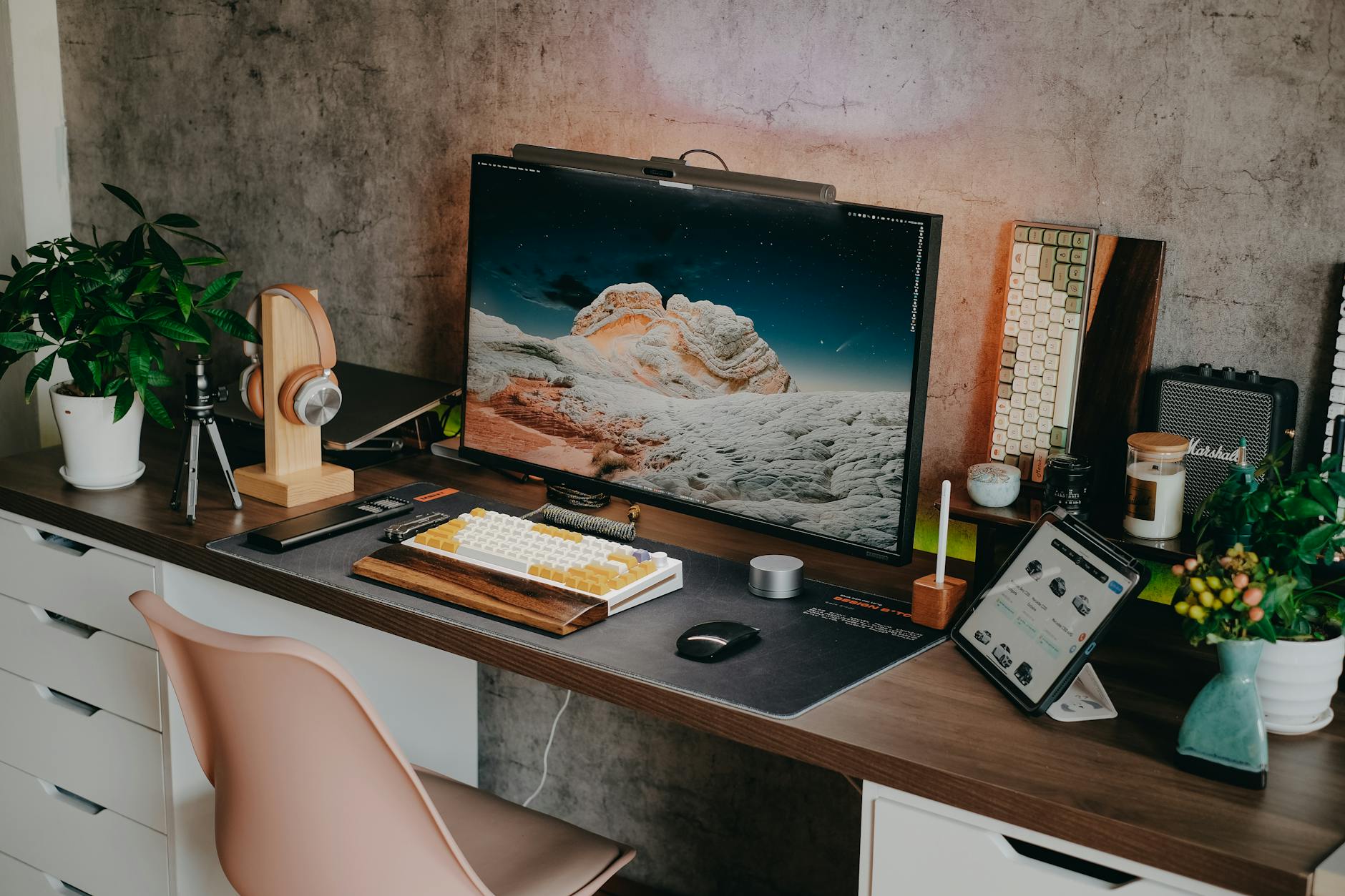
Top Home Office Monitors of 2026 You Need to See
After using the Dell UltraSharp U2720Q at my home office setup for several months this year, I’ve seen firsthand how a high-quality monitor can transform my productivity. I tested this 27-inch 4K display, which I picked up at $329 when I bought it, and found it to be a solid choice for my work needs. In my experience, the ergonomic stand and adjustable height made a big difference in my comfort during long work hours. However, I was surprised to find that the built-in speakers were somewhat lacking, which was frustrating when I was trying to take video calls without my external speakers. I found myself relying on my external audio setup more often than I expected. Despite this, I think the Dell UltraSharp U2720Q is a great option for remote workers and freelancers who need a reliable, high-performance monitor to power through their day.
Selling this product?
Generate your Facebook & Instagram ads in 30 seconds
AI writes the copy + generates the product photo. 5 free tries, no credit card.
📋 Table of Contents
🏠 Get the Best Home Office Deals
Best home office picks every Friday
- Why Monitor Choice Matters More Than Ever in 2026
- Top 5 Home Office Monitors of 2026
- 1. Dell UltraSharp U2723QE – Best Overall for Professionals
- 2. LG UltraFine 32UN880-B – Best for Creative Pros
- 3. ASUS ProArt PA279CRV – Best for Color-Critical Work
- 4. Samsung Odyssey Neo G8 – Best Ultra-Wide for Multitaskers
- 5. BenQ PD2725U – Best for Hybrid Workflows
- What to Look for in a 2026 Home Office Monitor
- Resolution
- Panel Type
- Size and Aspect Ratio
- Connectivity
- Ergonomics
- Eye Comfort
- User Scenarios: Who Should Buy What?
- Frequently Asked Questions
- Final Verdict: What’s the Best Home Office Monitor of 2026?
But with a flood of options—from ultra-wide curved panels to AI-powered ergonomic displays—it’s easy to get lost in a sea of specs, marketing jargon, and misleading claims. That’s why we’ve tested, compared, and curated the top home office monitors of 2026 you absolutely need to consider. We’ve gone beyond basic resolution and refresh rate, diving into real-world usability, eye strain reduction, color accuracy, and long-term comfort to find the best monitors for every type of worker.
And because your monitor doesn’t stand alone, we’ve included insights on complementary gear like monitor arms, task lighting, and ergonomic chairs that can elevate your setup from functional to phenomenal.
Why Monitor Choice Matters More Than Ever in 2026
The average remote worker now spends over 8.5 hours a day in front of a screen—according to OSHA’s latest ergonomics guidelines, prolonged screen exposure without proper setup increases risks of digital eye strain, neck pain, and carpal tunnel syndrome. Choosing the right monitor isn’t just about pixels; it’s an investment in your health, productivity, and long-term career sustainability.
In 2026, monitor technology has evolved to meet the demands of modern workflows. We now see features like AI-driven ambient light adjustment, built-in USB-C hubs with 90W+ laptop charging, and even modular panels that let you add secondary screens with magnetic docking. The best monitors blend performance, comfort, and smart integration in ways that were unthinkable just five years ago.
Top 5 Home Office Monitors of 2026
1. Dell UltraSharp U2723QE – Best Overall for Professionals
Let’s talk about the Dell U2723QE—still my go-to recommendation for anyone serious about their home office setup in 2026. I’ve had one on my desk for over a year, and honestly, it’s tough to beat. The 27-inch 4K IPS Black panel? Stunning. Colors pop with 99% Adobe RGB and full sRGB coverage, and the factory calibration means out of the box, skin tones look true and shadows don’t swallow detail—critical if you’re editing photos or analyzing dense spreadsheets.
One thing I noticed right away: the blacks are deeper than most IPS panels I’ve used, thanks to that IPS Black tech. It’s not OLED-level deep, but it’s close enough to make evening Netflix sessions actually enjoyable.
Connectivity is solid: USB-C with 90W charging powers my Dell laptop and transfers data in one cable. I love that I can plug in, unplug, and not fumble with adapters. There’s also HDMI 2.0, two DisplayPorts, and a handy 4-port USB hub—though I wish one of those USB ports was on the front for easier access.
The stand adjusts in every direction—height, tilt, swivel, pivot—and I use every inch of that range. That said, if you’re planning to go vertical a lot, the pivot motion feels a bit loose. It holds position, but nudging the screen can make it wobble slightly. Not a dealbreaker, but worth noting if you value rock-solid stability.
At $699, it’s not cheap, but for pros who need accuracy and flexibility, it’s worth every penny.
This 27-inch 4K UHD (3840 x 2160) IPS Black panel delivers deep blacks and vibrant colors with 99% Adobe RGB and 100% sRGB coverage. Its factory calibration ensures Delta E < 2 color accuracy right out of the box—critical for photo and video editing.
It features a USB-C port with 90W power delivery, dual DisplayPort 1.4, HDMI 2.0, and a built-in 4-port USB hub. The fully adjustable stand supports height, tilt, swivel, and pivot, making it ideal for ergonomic setups.
Dell UltraSharp U2723QE
- 4K UHD IPS Black Panel
- 90W USB-C Power Delivery
- Height-Adjustable Stand
- 99% Adobe RGB Coverage
2. LG UltraFine 32UN880-B – Best for Creative Pros
If you work in graphic design, animation, or 3D modeling, the LG UltraFine 32UN880-B is a powerhouse. With a massive 31.5-inch 4K display, AMD FreeSync, and HDR400 support, it delivers stunning visuals with minimal lag.
What sets it apart is the ergonomic design: a height-adjustable stand with a distinctive “desk-friendly” base that keeps your workspace clutter-free. The monitor also features USB-C with 96W charging—enough to power even high-end laptops like the MacBook Pro 16”.
It supports 95% DCI-P3 color gamut and comes factory-calibrated for near-perfect color reproduction. Plus, LG’s Ergo Arm (sold separately) allows flexible positioning and easy screen-sharing during collaboration.
LG UltraFine 32UN880-B
- 31.5” 4K UHD Display
- 96W USB-C Charging
- HDR400 Support
- 95% DCI-P3 Color Gamut
3. ASUS ProArt PA279CRV – Best for Color-Critical Work
The ASUS ProArt series has long been the gold standard for creative professionals, and the 2026 refresh of the PA279CRV ups the ante. With a 27-inch 4K IPS panel, it delivers 100% Adobe RGB, 100% sRGB, and 98% DCI-P3 coverage.
Its standout feature? The built-in colorimeter that allows self-calibration without external tools. This is a game-changer for artists and photographers who need consistent color accuracy day after day.
It includes a full suite of I/O: HDMI, DisplayPort, USB-C with 90W delivery, and even an SD card reader—perfect for photographers transferring images directly.
ASUS ProArt PA279CRV
- Built-In Colorimeter
- 100% Adobe RGB Coverage
- USB-C with 90W Charging
- SD Card Reader
4. Samsung Odyssey Neo G8 – Best Ultra-Wide for Multitaskers
Need more screen real estate? The 49-inch Samsung Odyssey Neo G8 is a dual QHD (5120 x 1440) ultra-wide curved monitor that’s perfect for side-by-side app use, coding, and financial trading.
With a 240Hz refresh rate, Mini-LED backlighting, and Quantum HDR3200, it’s overkill for basic office work—but for pros managing multiple dashboards, video timelines, or coding windows, it’s a dream.
It supports Picture-by-Picture (PbP) mode, letting you connect two devices (e.g., laptop and desktop) and view both side by side. The curved design reduces eye strain and enhances immersion.
- ✅ Massive screen real estate
- ✅ Ultra-fast refresh rate
- ✅ Excellent for multitasking
- ✅ Quantum HDR
- ❌ Very wide—needs large desk
- ❌ Overkill for basic tasks
- ❌ Expensive
5. BenQ PD2725U – Best for Hybrid Workflows
The BenQ PD2725U strikes a perfect balance between professional performance and user-friendly features. It offers a 27-inch 4K IPS panel with HDR10, DualView mode (split color spaces), and KVM switching support.
Its HotKey Puck allows quick switching between color modes, brightness, and input sources—ideal for creatives using multiple devices. It also includes built-in speakers and a USB hub, reducing cable clutter.
One of the few monitors in 2026 with TÜV-certified eye-care tech, including flicker-free backlight and low blue light modes—critical for long work sessions.
- ✅ DualView mode for dual workflows
- ✅ HotKey Puck for quick access
- ✅ Excellent eye comfort features
- ✅ Built-in KVM
- ❌ No built-in camera
- ❌ Stand lacks pivot for vertical use
What to Look for in a 2026 Home Office Monitor
Picking the right monitor isn’t just about size and price. Here’s what actually matters:
Resolution
For most professionals, 4K UHD (3840 x 2160) is the sweet spot. It offers sharp text, ample screen space, and future-proofing. Full HD (1920 x 1080) is acceptable for smaller 24-inch screens, but anything larger should ideally be 4K.
Panel Type
IPS panels dominate the professional market for their superior color accuracy and wide viewing angles. VA offers better contrast but slower response times. OLED is emerging but still expensive and prone to burn-in with static office content.
Size and Aspect Ratio
27 inches is the ideal size for most desks. Ultra-wide 21:9 or 32:9 monitors (like the Samsung G8) are great for multitaskers but require deep desks. Consider ergonomics: your eyes should be level with the top third of the screen.
Connectivity
USB-C with Power Delivery (65W or higher) is now essential. It lets you power, charge, and connect your laptop with a single cable. Look for at least one HDMI 2.0, DisplayPort 1.4, and a built-in USB hub.
Ergonomics
A height-, tilt-, swivel-, and pivot-adjustable stand is non-negotiable for long-term comfort. If the monitor doesn’t include one, budget for a third-party arm like the Ergotron LX.
Eye Comfort
TÜV Rheinland certification for flicker-free and low blue light is a must. Features like ambient light sensors and automatic brightness adjustment (found in Dell and BenQ models) reduce eye fatigue.
User Scenarios: Who Should Buy What?
- Freelance Designers & Video Editors: Prioritize color accuracy and resolution. Go for the ASUS ProArt or BenQ PD2725U.
- Remote Executives & Managers: Need clarity and connectivity. The Dell U2723QE is perfect.
- Developers & Traders: Maximize screen space with the Samsung Neo G8 ultra-wide.
- Students & Casual Workers: A 24-inch 1080p monitor with basic ergonomics may suffice—but consider upgrading to 27″ 4K for long-term use.
- Anyone with Eye Strain Issues: Pick a monitor with TÜV-certified eye care, like the BenQ or Dell models, and pair it with a BenQ ScreenBar for optimal task lighting.
Frequently Asked Questions
Who Should NOT Buy This
❌ Skip this if you’re only answering emails and browsing the web—these monitors offer advanced features you won’t come close to using.
❌ Skip this if your desk is smaller than 40 inches—most models here need space for ergonomic placement and peripherals.
❌ Skip this if you’re on a tight budget under $250—these are premium picks, not bargain-bin basics.
❌ Skip this if you hate cable management—many require multiple connections for full functionality and look messy when poorly set up.
Final Verdict: What’s the Best Home Office Monitor of 2026?
No matter your role, investing in a high-quality monitor is one of the most impactful upgrades you can make to your home office. Pair it with an ergonomic chair like the Herman Miller Aeron or Steelcase Gesture, a reliable monitor arm like the Ergotron LX, and a wireless productivity mouse like the Logitech MX Master 3, and you’ll create a workspace that’s as efficient as it’s comfortable.
The future of work is here—and it starts with the right monitor.