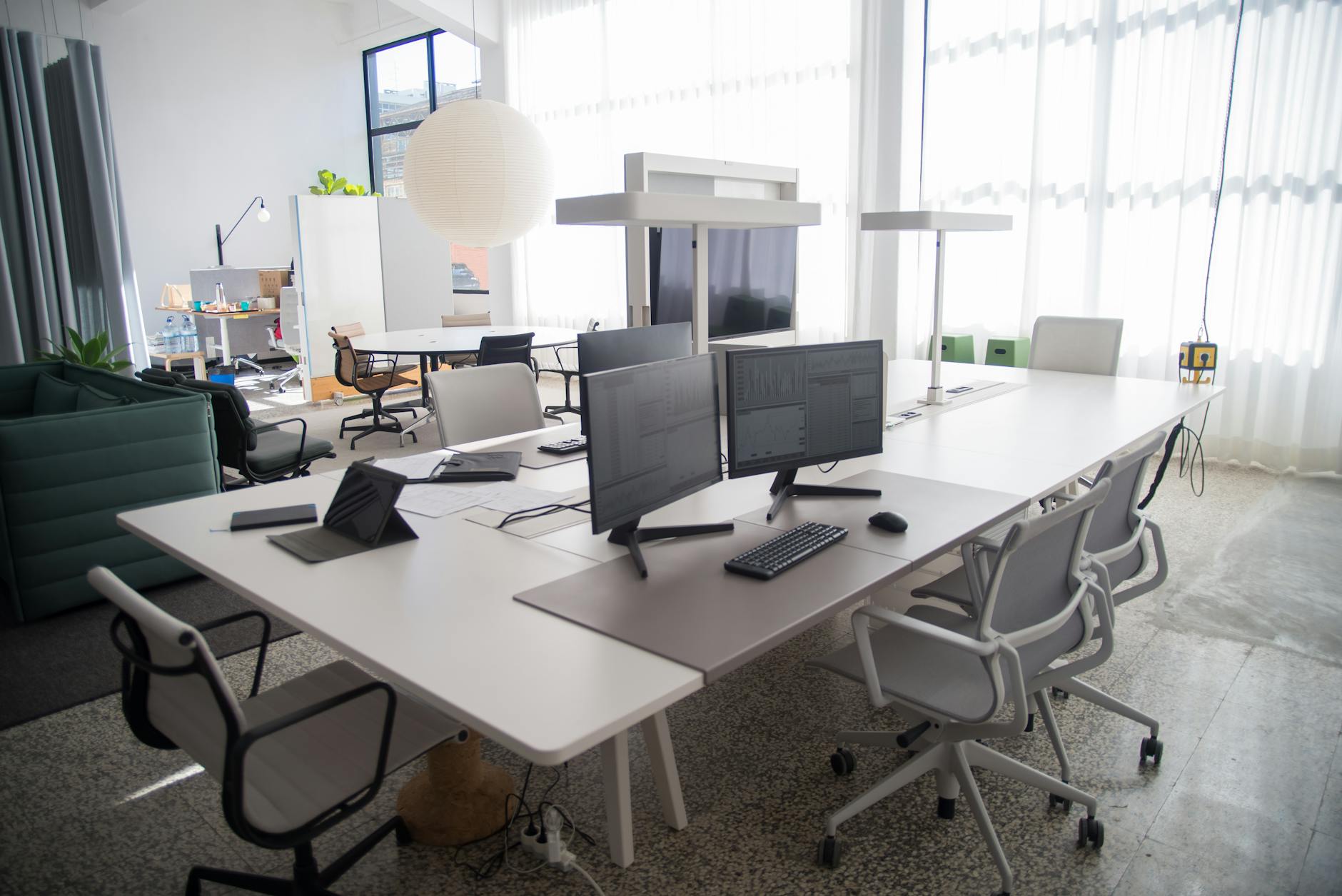
Which Way Should Your Office Chair Face? (2026)
Introduction: The Science and Symbolism Behind Chair Positioning
In 2026, the modern workplace—whether at home or in an office—has evolved to prioritize not only productivity but also holistic well-being. How we arrange our furniture, particularly our office chair and desk, impacts everything from our posture and eye strain to our mental focus and emotional comfort. One seemingly small decision—which way your office chair should face—can have far-reaching implications.
📋 Table of Contents
- Which Way Should Your Office Chair Face? (2026)
- Introduction: The Science and Symbolism Behind Chair Positioning
- Feng Shui and the Commanding Position: Harnessing Energy for Success
- 🏠 Get the Best Home Office Deals
- Ergonomics: Chair Direction, Glare, and Physical Health
- Psychological Comfort: Facing the Door vs. the Wall
- Natural Light Optimization: Aligning Chair Direction with Sun Path
- Small Office Solutions: Making the Most of Limited Space
- Evaluating the Best Ergonomic Office Chairs for 2026
- Herman Miller Aeron Chair
- Autonomous ErgoChair Pro
- Flexispot C7 Ergonomic Chair
- VIVO Ergonomic Office Chair
- Hbada Ergonomic Office Chair
- Integrating Chair Direction with Ergonomic Design
- Related Articles
- The Verdict: What Direction Should Your Chair Actually Face?
- Frequently Asked Questions (FAQ)
- Final Thoughts: Prioritize Ergonomics, Then Optimize Direction
From the ancient principles of feng shui to cutting-edge ergonomics and psychological studies, the direction your chair faces influences your energy flow, workflow efficiency, and even career trajectory. In this comprehensive guide, we’ll explore the optimal office chair positioning through multiple lenses: feng shui, ergonomics, natural light management, psychological safety, and practical constraints.
Selling this product?
Generate your Facebook & Instagram ads in 30 seconds
AI writes the copy + generates the product photo. 5 free tries, no credit card.
🏠 Get the Best Home Office Deals
Weekly deals + expert picks, free
We’ll also evaluate top-rated ergonomic office chairs that support long-term comfort, regardless of chair direction, and offer solutions for small or awkwardly shaped workspaces.
By the end, you’ll know exactly how to orient your desk and chair for maximum benefit—whether you’re working from a 10×10 home office or a corner cubicle.
Feng Shui and the Commanding Position: Harnessing Energy for Success
Feng shui, the traditional Chinese practice of harmonizing individuals with their environment, has long influenced interior design, especially in workspaces. According to feng shui experts, the “commanding position” is the most powerful place to position your desk and office chair.
So, what exactly is the commanding position?
It’s a spot where you can see the door without being directly in line with it. You should have a solid wall behind your back (representing support), and the entrance should be visible from your chair. This setup symbolizes control, stability, and awareness—key traits for leadership and effective work.
Why the commanding position matters:
- Psychological security: Facing the entrance reduces subconscious anxiety. You’re not caught off guard by people entering, which helps you stay calm and focused.
- Career momentum: Feng shui associates the commanding position with visibility and opportunity. You’re metaphorically in a position to “see opportunities coming.”
- Energy flow (chi): Chi should enter the room gently and flow smoothly around you. Placing your back to a wall and facing the doorway allows chi to circulate, rather than rush past or stagnate behind you.
What to avoid in feng shui:
- Facing a wall directly—symbolizes stagnation or lack of progress.
- Having your back to the door—creates a sense of vulnerability, known as the “poison arrow” in feng shui.
- Positioning your desk in the middle of the room—this disrupts grounding and makes you feel exposed.
Incorporating feng shui principles into your workspace isn’t about superstition—it’s about creating an environment that supports clarity, confidence, and calm. The chair’s direction, therefore, is not arbitrary; it’s strategic.
Ergonomics: Chair Direction, Glare, and Physical Health
While feng shui focuses on energy, ergonomics is grounded in physical science. And in 2026, both remote and hybrid workers are more aware than ever of how posture, strain, and lighting affect long-term health.
One of the most debated ergonomic issues is monitor glare caused by window positioning. Even with anti-glare screens, sitting with a window directly in front of or behind you can lead to eye fatigue, headaches, and reduced screen visibility.
Ideal desk orientation to avoid glare:
- Sidebar placement: Position your desk so that windows are to your left or right (lateral) rather than behind or opposite you. This allows natural light while minimizing reflections on your screen.
- Avoid west-facing windows in the afternoon: These tend to create intense, harsh light that shifts across the room and causes blinding glare.
- North-facing light is preferred: It’s consistent, soft, and diffuse—ideal for work environments.
If your chair must face a window, consider adding blackout or sheer blinds to control light. But the best ergonomic setup often requires facing away from the window—that is, with the window to your side or behind your monitor, not your back.
This introduces a conflict: Feng shui may suggest facing the door, while ergonomics might suggest facing away from bright windows. So how do we reconcile these?
Psychological Comfort: Facing the Door vs. the Wall
Beyond ergonomics and feng shui, psychology plays a major role in how we feel in our workspaces.
Neuroscientists and environmental psychologists agree: your field of vision directly impacts your sense of control and focus.
Why facing the door helps:
- Reduces hyper-vigilance: When you can’t see who’s entering your space, your brain stays in low-level alert mode. This increases cortisol (stress hormone) levels and reduces concentration.
- Enhances situational awareness: Teachers, managers, and remote workers alike report feeling more in-control and responsive when they face the entrance.
- Boosts productivity: A study from the Journal of Environmental Psychology found that workers who could see their door reported 23% higher focus during deep work sessions.
On the other hand, facing a blank wall—while it may reduce distractions—can feel isolating or confining. Some employees find it makes them feel “closed off” or stagnant, both physically and mentally.
Yet, in open-plan offices, constant foot traffic past your desk can be a distraction. In such cases, a compromise—facing slightly diagonal to the door or using a room divider—can balance visibility with focus.
Natural Light Optimization: Aligning Chair Direction with Sun Path
In 2026, sustainability and biophilic design are mainstream. Access to natural light is no longer a luxury—it’s a priority for mental health and circadian rhythm regulation.
How sunlight changes by direction:
- East-facing: Morning light is soft and invigorating. Ideal for early risers or those who start work before 10 a.m.
- West-facing: Afternoon sun is harsh and hot. Can cause overheating and screen glare, especially in summer.
- South-facing: In the Northern Hemisphere, this provides the most intense, direct sunlight all day—great for vitamin D but challenging for screen work.
- North-facing: Offers cool, indirect light—perfect for consistent, glare-free illumination.
If your office gets morning sun from the east, placing your chair to face north or south allows you to harness light without direct glare. A north-facing window behind you with blinds or a sheer curtain can illuminate your workspace gently without washing out your screen.
For home offices, consider seasonal adjustments. As the sun shifts in winter and summer, reposition your chair or adjust shades accordingly. Smart lighting systems can also help maintain optimal brightness levels year-round.
Small Office Solutions: Making the Most of Limited Space
Not every workspace allows for ideal feng shui or ergonomic positioning. In small rooms, studios, or shared apartments, you may be stuck with only one viable desk setup.
Common small office challenges:
- Limited wall space for desk placement
- Doors that swing into workspace
- Fixed furniture or built-in cabinetry
Here are proven strategies to optimize chair direction in tight spaces:
- Use a corner desk: Place it diagonally to face both the door and a window, maximizing visibility and natural light.
- Install a mirror: A small wall mirror opposite your chair can reflect the door, giving you visual awareness without needing to turn around—this satisfies feng shui principles even in non-ideal layouts.
- Choose a mobile chair: Wheels allow you to reposition easily throughout the day, facing different directions as needed.
- Add a room divider with a window cutout: Blocks clutter but maintains line of sight to the door.
In compact areas, flexibility trumps perfection. Prioritize ergonomic posture and screen comfort first, then integrate psychological and feng shui elements where possible.
For more options and a full comparison, see our complete office chair buying guide.
Evaluating the Best Ergonomic Office Chairs for 2026
While chair direction matters, your actual chair’s design has a far greater impact on health and productivity. A poorly built chair will cause discomfort and injury—even if it’s facing the perfect direction.
We’ve reviewed top ergonomic chairs in 2026, balancing performance, comfort, and value.
1. Herman Miller Aeron Chair
The gold standard in office seating, the Herman Miller Aeron Chair continues to dominate in 2026. Designed with input from orthopedic specialists, it’s engineered for all-day comfort.
Its PostureFit SL lumbar support mimics the body’s natural curve, reducing lower back strain. The 8Z Pellicle mesh adapts to your movements, providing support without heat buildup—ideal for long sessions.
The adjustable tilt mechanism allows you to customize recline resistance, promoting dynamic sitting. While premium-priced at $1,445, it’s an investment in spine health and productivity.
Herman Miller Aeron Chair
- PostureFit SL lumbar
- Adjustable tilt
- 8Z Pellicle mesh
Check Price on Amazon
2. Autonomous ErgoChair Pro
Autonomous disrupts the ergonomic market with the ErgoChair Pro—a feature-rich chair at a mid-tier price ($499). It offers 11-point adjustment, allowing precise customization of seat height, depth, armrests, and lumbar support.
The lumbar support is adjustable vertically and depth-wise, a rare feature at this price. The chair reclines up to 22 degrees, ideal for task shifting and micro-breaks during long workdays.
While not mesh-backed like the Aeron, the breathable fabric prevents overheating. Best for users 5’4″ to 6’2″, it’s a strong contender for remote workers seeking premium support without premium cost.
Autonomous ErgoChair Pro
- 11-point adjustment
- Lumbar support
- Recline 22 degrees
3. Flexispot C7 Ergonomic Chair
Known for budget-friendly yet functional furniture, Flexispot earns its spot in 2026 with the C7 Ergonomic Chair. Priced at $349, it delivers high-end features like 3D lumbar adjustment and 360-degree armrests.
The breathable mesh back ensures airflow, reducing sweat buildup during extended use. The seat cushion is thick and supportive, avoiding the “sinking” feel common in cheaper models.
While assembly takes about 20 minutes, the build quality rivals chairs twice its price. Ideal for home offices and startups looking to outfit multiple workstations affordably.
Flexispot C7 Ergonomic Chair
- 3D lumbar
- 360 armrests
- Breathable mesh back
4. VIVO Ergonomic Office Chair
VIVO enters 2026 with a value-focused chair priced at $199. It’s not the most adjustable, but it gets the basics right: adjustable lumbar support, mesh back, and flip-up armrests for easy chair movement.
The flip-up armrests are a standout—perfect for pulling into tight desks or transitioning between seated and standing positions. The lumbar support is fixed but well-shaped, offering moderate lower back relief.
This chair is best for part-time remote workers or those needing a reliable secondary workstation. It won’t replace a high-end model, but it’s one of the best budget ergonomic chairs available.
VIVO Ergonomic Office Chair
- Adjustable lumbar
- Mesh back
- Flip-up armrests
5. Hbada Ergonomic Office Chair
At just $149, the Hbada Ergonomic Office Chair is a budget powerhouse. It features a reclining mesh design, adjustable headrest, and a removable lumbar cushion.
The recline function (up to 90–110 degrees) makes it great for reading or short breaks. While not ideal for 8-hour daily use, it’s excellent for students, freelancers, or secondary home offices.
Build quality is surprisingly sturdy, though some users report minor squeaking after months of use. For under $150, it’s one of the most accessible ergonomic options in 2026.
Hbada Ergonomic Office Chair
- Reclining mesh
- Adjustable headrest
- Lumbar cushion
Integrating Chair Direction with Ergonomic Design
Now that we’ve covered top chairs, let’s integrate this with chair orientation.
Even if your chair faces a wall due to space constraints, a high-quality ergonomic chair can mitigate the downsides. Proper lumbar support, armrest height, and seat depth ensure your body isn’t paying the price for your room’s limitations.
Conversely, no amount of feng shui or ideal window placement can compensate for poor posture. A $150 chair with weak back support will lead to pain, regardless of whether you’re facing north or east.
Key ergonomic checkpoints:
- Your feet should rest flat on the floor (or footrest)
- Knees at 90 degrees, hips slightly higher than knees
- Elbows at 90 degrees, arms supported by armrests
- Top of monitor at or slightly below eye level
- Screen about an arm’s length away
These rules are non-negotiable. Once posture is optimized, then—and only then—should you fine-tune chair direction for psychological and energetic benefits.
The Verdict: What Direction Should Your Chair Actually Face?
After analyzing feng shui, ergonomics, psychology, and real-world constraints, here’s the definitive answer:
While ideal positioning includes facing the door with a solid wall behind you (feng shui command position) and natural light from the side (ergonomics), the most critical factor remains your chair’s build quality and adjustability.
Even in a non-ideal space, a well-designed ergonomic chair can prevent injury, enhance focus, and support long-term productivity. And in cases where chair direction must be compromised—such as open-plan offices or small rooms—tools like mirrors, room dividers, or smart blinds can help bridge the gap.
Frequently Asked Questions (FAQ)
Final Thoughts: Prioritize Ergonomics, Then Optimize Direction
In 2026, the office is more than a desk and chair—it’s a personalized productivity ecosystem. While the direction your chair faces has real benefits in terms of energy flow, mental focus, and comfort, it’s secondary to the fundamentals of ergonomics.
Invest first in a supportive, adjustable chair that fits your body. Then, arrange your desk and chair to face the door with minimal screen glare. Use mirrors, lighting, and room layout hacks to adapt feng shui and ergonomic principles to your space.
Hbada Ergonomic Office Chair
- Adjustable lumbar support
- Breathable mesh back
- 360-degree swivel
- Height-adjustable armrests
- Easy assembly
Govee Smart LED Strip Lights
- App-controlled lighting
- Color customization for mood and focus
- Voice control with Alexa and Google
- Easy wall mounting
- Timer and scheduling modes
The ideal office setup isn’t about perfection—it’s about balance. With the right chair and thoughtful positioning, you can create a workspace that energizes your body, calms your mind, and fuels your success.
- ✅ Proper chair facing direction reduces glare from windows
- ✅ Facing the door reduces anxiety and improves focus
- ✅ East/north facing positions reduce eye strain from sunlight
- ❌ Not always possible to choose ideal direction in small offices
- ❌ Open plan offices may not allow ideal desk orientation

Sarah Tillman brings a design-first perspective to home office reviews. With a degree in Interior Architecture from the Rhode Island School of Design and 8 years of experience designing home offices for clients across New York and Los Angeles, Sarah evaluates products on aesthetics, spatial...
View all reviews by Sarah Tillman →